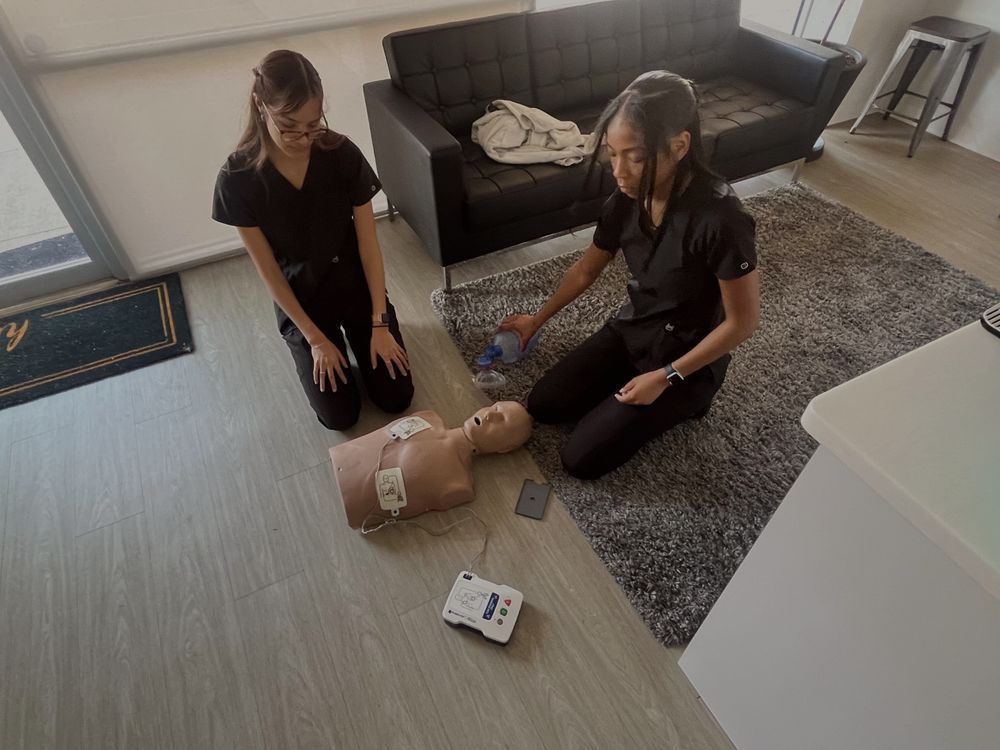
What to Expect From a Medical Assistant Training Program in Philadelphia

A medical assistant training program prepares you for one of the most in-demand positions in healthcare — and it does it in a fraction of the time required by most clinical degrees. In Philadelphia, that means you could go from no clinical experience to employed in a physician’s office, urgent care clinic, or specialty practice in approximately 18 weeks.
Here’s what quality training actually looks like, what it covers, and how to evaluate your options before you commit.
Why 18 weeks is enough time
Eighteen weeks of focused, intensive training isn’t a shortcut — it’s an intentional curriculum design. A dedicated medical assistant training program eliminates general education requirements and semester gaps and concentrates every hour on the clinical and administrative skills the job actually requires.
Longer programs — 1-year or 2-year community college options — cover the same core content. The difference is everything else: general education courses, slower pacing, and scheduling gaps that stretch a 4-month skill set into a 12-month timeline. A focused medical assistant training program removes that filler without removing the substance.
What the training covers
Clinical skills: the hands-on work
Vital signs and patient assessment
You’ll build this skill set in the first few weeks and refine it throughout the program:
- Manual and electronic blood pressure measurement
- Pulse rate, respiratory rate, and temperature
- Oxygen saturation via pulse oximetry
- Height, weight, BMI, and pain assessment documentation
Phlebotomy
Drawing blood is a daily responsibility in most medical assistant positions:
- Venipuncture technique using vacutainer and butterfly systems
- Capillary blood draws (fingersticks)
- Proper specimen labeling, handling, and transport
- Managing patient reactions including vasovagal episodes
Injections and medication administration
Under provider supervision, medical assistants administer:
- Subcutaneous injections (vaccines, insulin, allergy shots)
- Intramuscular injections (hormone therapy, vaccines)
- Intradermal injections (TB skin testing)
- Documenting administration and observing for adverse reactions
EKG/Electrocardiography
- Placing all 10 electrodes correctly for a 12-lead EKG
- Operating cardiac monitoring equipment
- Recognizing and correcting artifact
- Transmitting results for provider review
Point-of-care laboratory testing
- Urinalysis (dipstick and microscopic)
- Blood glucose monitoring
- Rapid tests: strep, influenza, COVID-19, pregnancy
- Hemoglobin and hematocrit testing
Clinical procedures and exam assistance
- Setting up and breaking down exam rooms between patients
- Instrument sterilization and handling
- Assisting providers during physical exams and minor procedures
- Wound care: cleaning, dressings, suture and staple removal
- Applying and removing splints and orthopedic supports
Administrative skills: the other half of the job
Most medical assistants work across both clinical and administrative functions, particularly in smaller practices:
- EHR documentation — entering vital signs, chief complaints, histories, and provider notes in systems like Epic, eClinicalWorks, and Athena
- Scheduling — managing appointment books, handling urgent requests, coordinating specialist referrals
- Insurance and billing — verifying coverage, understanding CPT and ICD-10 codes, processing prior authorizations
- Patient communication — phone triage, test result delivery, appointment reminders
- HIPAA compliance — maintaining patient privacy in all communications and records
The externship experience
A quality medical assistant training program includes a supervised externship in a real medical setting. This is not optional — it’s where classroom training becomes clinical competency.
During your externship, you’ll work in an actual physician’s office, urgent care facility, or specialty clinic near Philadelphia, applying every skill you’ve developed under the supervision of working medical professionals.
Two outcomes matter here:
- Competence — real patients and real procedures build the confidence that simulations can’t fully replicate
- Connections — externship sites hire the assistants they’ve trained, or refer graduates they trust to other practices in their networks
Your externship is your first professional reference, your first exposure to the local healthcare job market, and often your first opportunity for employment.
CCMA certification: what it is and why it matters
The Certified Clinical Medical Assistant (CCMA) exam, administered by the National Healthcareer Association (NHA), tests the clinical and administrative competencies of a working medical assistant. It’s one of the most widely recognized credentials in the field.
Certified medical assistants benefit from:
- Higher employer confidence — CCMA signals verified clinical competency
- Stronger hiring outcomes — many employers prefer or require certification
- Better starting pay — credentialed MAs consistently earn more in the same markets
A quality medical assistant training program integrates CCMA prep throughout the curriculum — so exam readiness isn’t a last-minute sprint, but a natural result of solid training.
Who this training is designed for
- Career changers moving from another field into healthcare
- Working adults who need an efficient, manageable timeline
- Recent graduates ready to start earning without a multi-year degree
- Parents and caregivers balancing school with family obligations
- Complete beginners — no prior medical experience is needed
Job outlook and salary
The Bureau of Labor Statistics projects 14% growth in medical assistant employment through 2032 — almost double the national average for all occupations. Key drivers include an aging population, continued expansion of outpatient care settings, and increasing delegation of routine clinical tasks from physicians to trained support staff.
The national median salary for medical assistants is approximately $42,000 per year. Entry-level positions typically start in the $33,000–$38,000 range, with specialty practices and more experienced assistants reaching $48,000 or more.
Completing an 18-week medical assistant training program means you enter this job market months ahead of students in longer programs — a head start that compounds over the entire arc of your career.
Get started at Philadelphia Medical Assistant School
Philadelphia Medical Assistant School offers an 18-week medical assistant training program in Philadelphia with hands-on clinical training from day one, externship placement in local medical practices, and complete CCMA certification preparation.
- Full curriculum overview: Program details
- Tuition and payment plans: Tuition
- Talk to our enrollment team: Contact us
- Ready to apply: How to apply
You're only a few months from the medical assistant career you deserve.